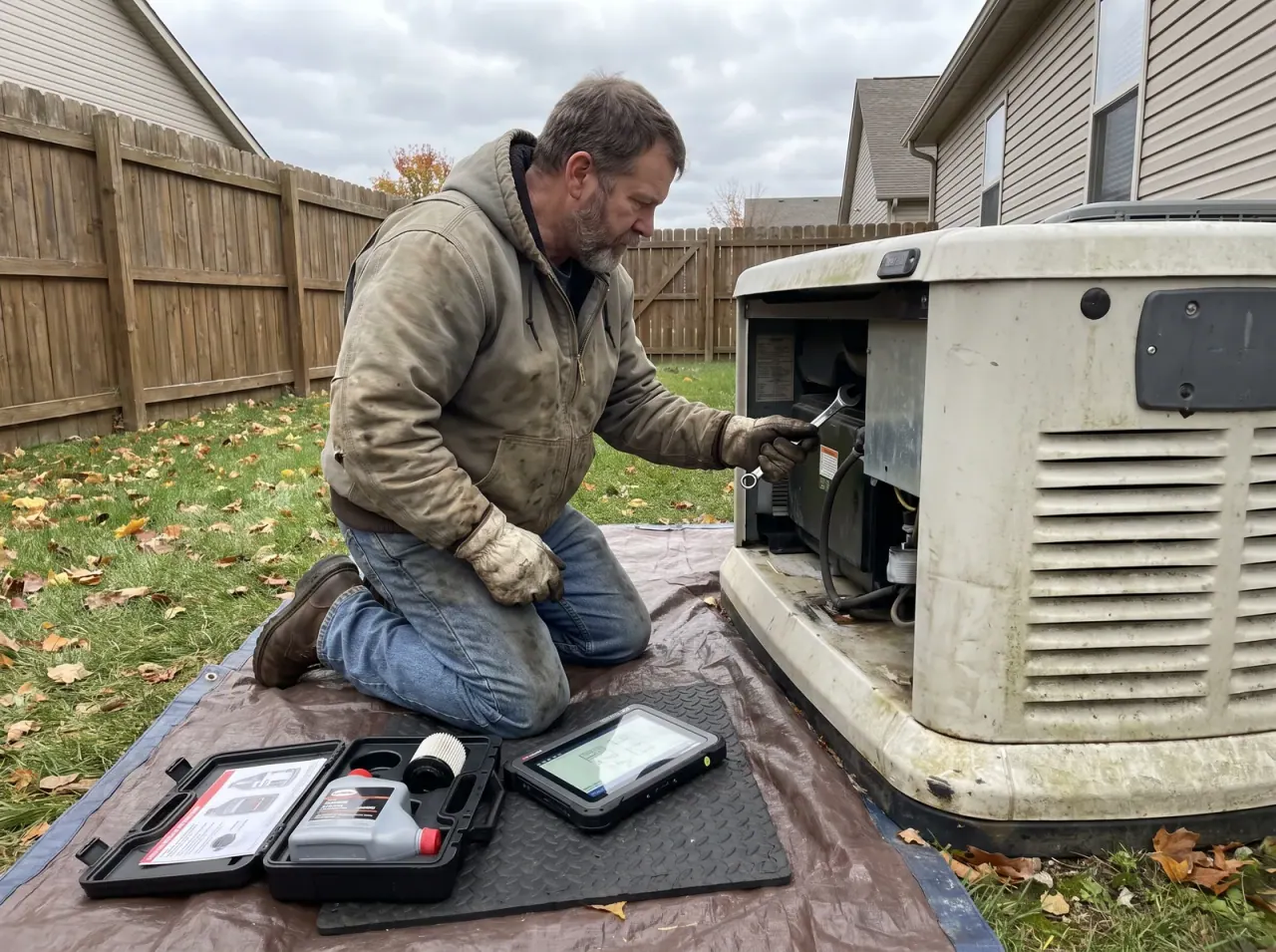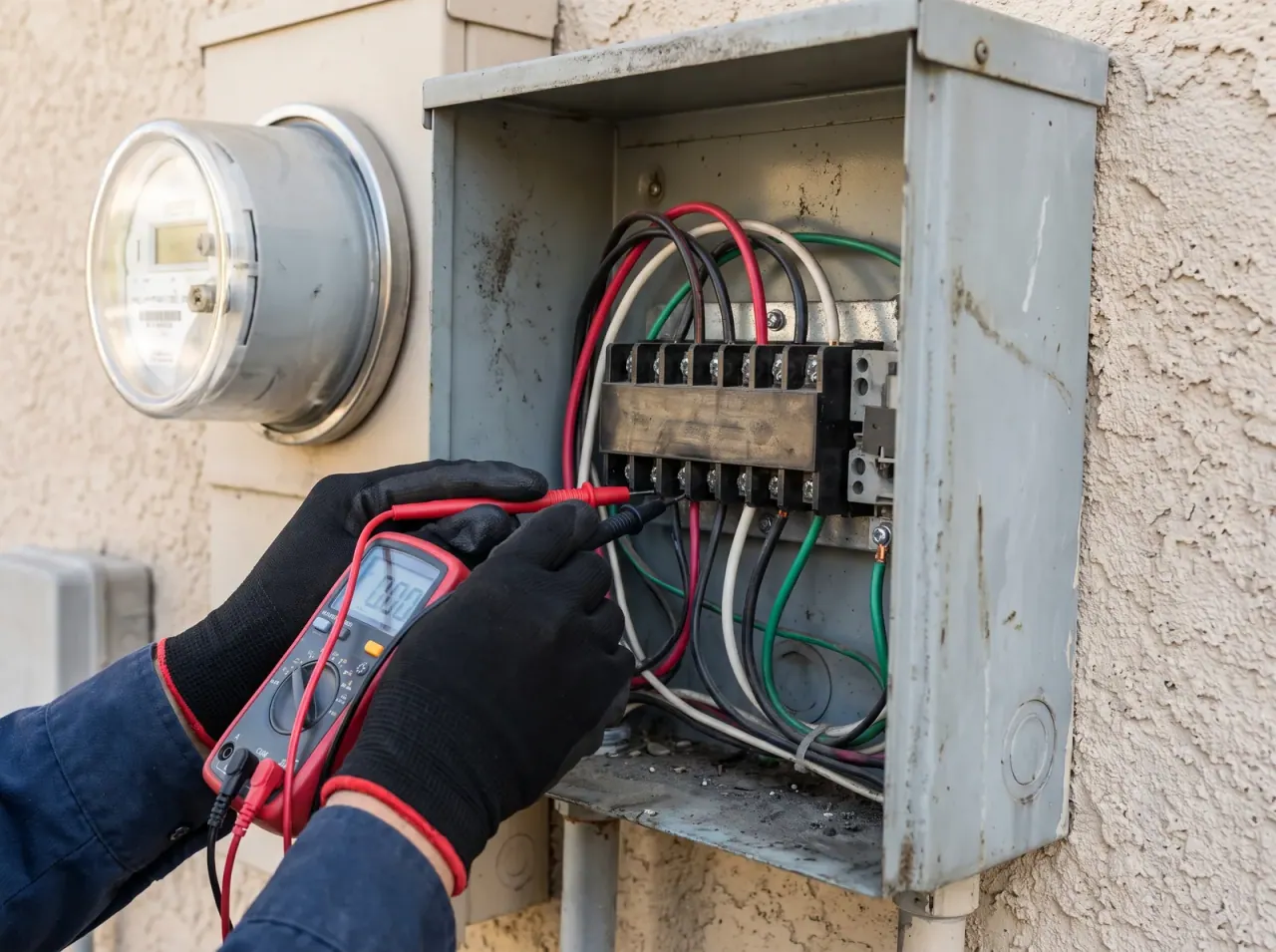
Put household safety ahead of the generator
An equipment problem can coincide with flooding, damaged wiring, a fuel smell or a carbon-monoxide alarm. Do not approach equipment surrounded by water or open covers to look for a fault. A CO alarm or suspected fuel leak requires the appropriate emergency response; it is not a request to continue troubleshooting.
If a household member depends on powered equipment for health needs, use the continuity plan supplied by their healthcare or equipment provider. A repair inquiry cannot promise restoration in time for those needs. Keep emergency contacts separate from the generator service number.
This guide covers observations and communication. It does not tell you to bypass a safety shutdown, test gas pressure, access energized components or restart equipment outside the applicable manufacturer procedure.
Describe the symptom before naming the failed part
| Safe observation | What to tell the technician | What it does not prove |
|---|---|---|
| Engine never starts | Exact display message and whether you heard a starting attempt | That the battery is the only problem |
| Engine starts then stops | Message and approximate sequence | That a reset will repair the fault |
| Engine runs; house is still dark | Which circuits lack power; controller message if visible | That the engine itself has failed |
| Only some loads are unavailable | Which loads work and which are paused | That every unavailable load is a fault |
Use plain words. “It made two starting attempts and now displays this message” is more useful than “the starter is bad” when no diagnosis has been made. If you cannot observe the display safely, report that limitation.
Record the exact fault message
Photograph or copy the message exactly as displayed, including any number. Note the time and whether the generator was already supplying the home. Do not clear it merely to make the screen look normal before the service conversation.
Generac’s outage fault guidance distinguishes controller types and warns that restarting with loads applied can damage equipment. Procedures depend on the circumstances and equipment. Use the exact model instructions or the service professional’s guidance rather than a reset sequence copied from another controller.
If an attempted reset allowed by the applicable instructions fails or a fault returns, stop repeating it and report that result. A returning fault is information, not an invitation to defeat the shutdown.
Gather a repair-ready information pack
- City and the safest callback number.
- Generator brand, model and serial number if readily available.
- The exact fault message or a description of what you can observe safely.
- Whether utility power is out and whether any backed-up circuits have power.
- When the system last exercised or operated successfully, if known.
- Last service date, recent work and any unresolved issues.
Include whether fuel-supply work, panel work or new household equipment recently changed. These are context, not proof of the cause. Do not upload passwords, account credentials or unnecessary personal information with a repair request.
The repair inquiry page helps you describe an existing system. The transfer-system page explains why “engine runs, no household power” is a separate symptom from a no-start.
Use a backup method with its own safety plan
Do not improvise a household connection from a portable generator while waiting for service. CPSC warns against backfeeding through an outlet. Portable equipment also needs its own safe outdoor operating location and manufacturer instructions. See the portable versus standby guide before assuming the existing standby connection can be used by another source.
Avoid moving an operating generator to a garage or enclosed area because the weather is uncomfortable. Do not enter a flooded basement to reconnect an appliance. The temporary plan must be safe on its own terms.
After the repair, ask what changed
Request a written diagnosis, the work performed, any unresolved issues and the agreed operating test. If the system has load management, ask how to recognize normal paused-load behavior. Keep that explanation with the maintenance record.
When contacting Hoosier Generators, describe the symptoms and immediate circumstances. Availability and repair scope must be confirmed; the website does not promise emergency dispatch or a restoration deadline. If a condition is hazardous, use emergency services or the responsible utility rather than waiting for a website response.
Sources and scope
Prepared from the primary sources below. Equipment manuals and the responsible local authority control the requirements for your specific project; this page is a planning aid, not an installation procedure.