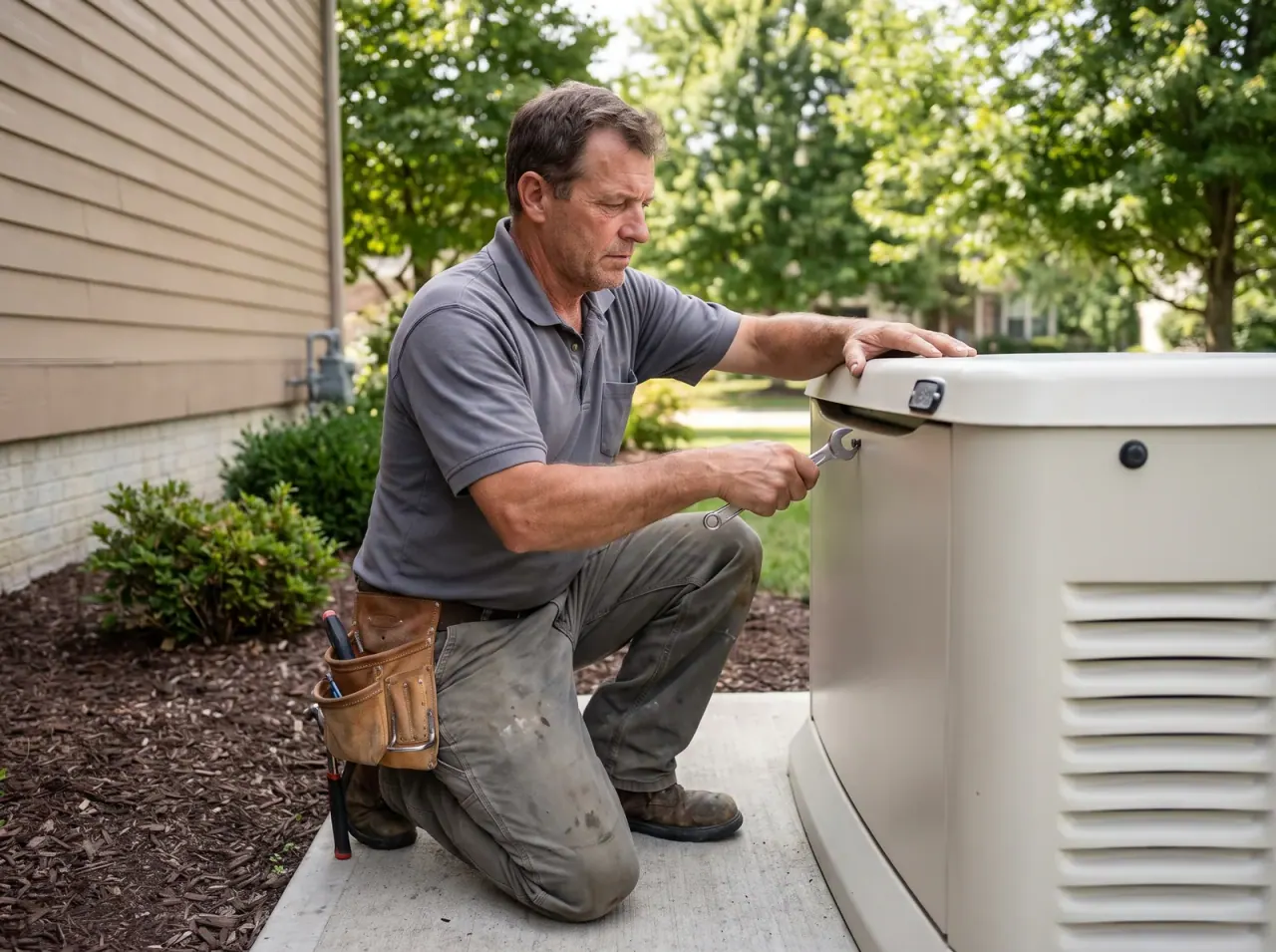
The first question is who will operate it
A power outage at home is a different problem from an outage while you are away. Most portable-generator plans require someone to set up the unit, start it and manage its fuel. A properly designed standby system is intended to respond automatically through its transfer equipment. Generac’s comparison describes that basic distinction.
Walk through a practical scenario: it is dark, rain is blowing across the driveway and the person who normally moves the portable generator is not home. Who will operate it, and where will they put it? If there is no reliable answer, the purchase has not yet become a workable backup plan.
Compare the complete systems
| Decision | Portable plan | Standby plan |
|---|---|---|
| Starting | Usually requires someone on site | Designed for automatic startup |
| Connection | Suitable cords or professionally designed household transfer equipment | Permanent wiring and transfer equipment |
| Fuel | A refueling and storage plan matched to the model | A designed natural-gas or propane supply |
| Property fit | Safe outdoor operating space is essential | Approved permanent placement and installation are essential |
| Budget | Include connection equipment and safe setup, not only the unit | Include fuel work, site work, electrical work and approvals |
These are system-level differences, not specifications for every model. A large portable generator does not automatically make a safe whole-house installation. A standby connected to the whole panel does not automatically supply every load simultaneously. Read the generator sizing worksheet before making either assumption.
Portable-generator placement is a life-safety requirement
CPSC says portable generators must run outdoors, at least 20 feet from doors, windows and vents that could admit exhaust. Never run one inside a home, garage, crawlspace or shed, even with doors open. Follow the manufacturer’s instructions and use working carbon-monoxide alarms. Read the CPSC safety alert.
Do not reuse that portable rule as the installation plan for a permanent standby unit. Standby equipment has its own model-specific clearance and installation requirements. The standby placement guide keeps those issues separate.
If a property does not provide a safe outdoor operating area, do not improvise with a balcony, garage or partly enclosed patio. Reconsider the backup method before buying a combustion-engine portable generator.
How will the house receive power?
Plug-in appliances and hardwired household circuits are different tasks. Ask a qualified electrician about a listed transfer arrangement appropriate to your equipment. CPSC warns against plugging generator output into a wall outlet to feed the house, a dangerous practice called backfeeding. Never make or use a male-to-male cord for this purpose.
A household connection also needs a clear operating sequence and a circuit plan. The owner should know which loads are backed up and which must remain off. Compare transfer-switch planning before treating a unit’s advertised wattage as the entire system.
Use a whole-cost checklist
- Equipment purchase and the connection method.
- Installation, permits or other approvals that apply to the proposed work.
- Fuel supply, safe storage where relevant, and outage replenishment.
- Maintenance, replacement parts, inspections and the time required to operate the plan.
Standby has a larger permanent-installation scope. Portable equipment brings operating responsibilities that should be priced in time as well as money. Avoid a comparison that treats the standby’s installed price against the portable’s box price and ignores everything needed to use it.
Choose a plan you can practice
The strongest choice is the one whose limitations you understand. Ask the supplier to explain how the system works, what stops it from providing power, and who can help when there is a problem. Do not rely on a promise of uninterrupted power: startup, faults, fuel supply and maintenance all belong in the plan.
For standby, begin with the installation planning page. For a few small electronics, also consider whether a suitable battery-based solution covers your narrower need; it has different capacity and charging limits. When you ask about your property, describe the outage tasks first and let the equipment choice follow.
Sources and scope
Prepared from the primary sources below. Equipment manuals and the responsible local authority control the requirements for your specific project; this page is a planning aid, not an installation procedure.