Review winter loads before winter weather
Start with the heating equipment. A gas furnace still needs electricity for its relevant components. A heat pump with electric auxiliary heat may need a different load plan from the one used for summer cooling. Record the actual equipment and discuss which heating modes the proposed backup system supports.
Do not change thermostat settings or disable heating stages to fit a generator without professional review. Use the heat-pump backup worksheet to collect the right model and operating information. Consider pumps and water equipment alongside heat rather than adding them after the generator size has been chosen.
Winter preparation is also a household task. If the backup system fails, decide where the household can go and how it will contact help. A generator adds an option; it should not erase the rest of the outage plan.
Ask whether your model needs a cold-weather accessory
A cold-weather kit is an equipment-specific question. Ask the manufacturer or qualified service professional which accessories apply to the model and conditions, whether anything is already installed, and how the installation is documented. Do not assume one accessory or temperature threshold applies to all brands.
Generac’s cold-weather preparation guide provides broader preparation context. Use that as a starting point, then obtain the instructions for your exact equipment. A shopping page with a compatible-looking photo is not adequate confirmation.
If an accessory needs electrical or other installation work, have the responsible professional handle it. The owner’s job is to know what is fitted and maintain the record, not to open equipment and identify components while the system can start automatically.
Bring service records up to date
| Review item | Document to check | Question to resolve |
|---|---|---|
| Maintenance | Model manual and last service report | Is anything due by date, hours or operating conditions? |
| Starting readiness | Professional service findings | Is there an unresolved battery, charging or starting issue? |
| Fuel supply | Utility/supplier and installation records | Are winter demand and access assumptions still appropriate? |
| Operation | Handoff instructions and load plan | Which loads and heating modes are covered? |
Use the maintenance-log guide if records are scattered. A controller reminder and a service invoice have different meanings; keep both, then resolve any missing evidence with the service provider.
Keep access and airflow in the winter plan
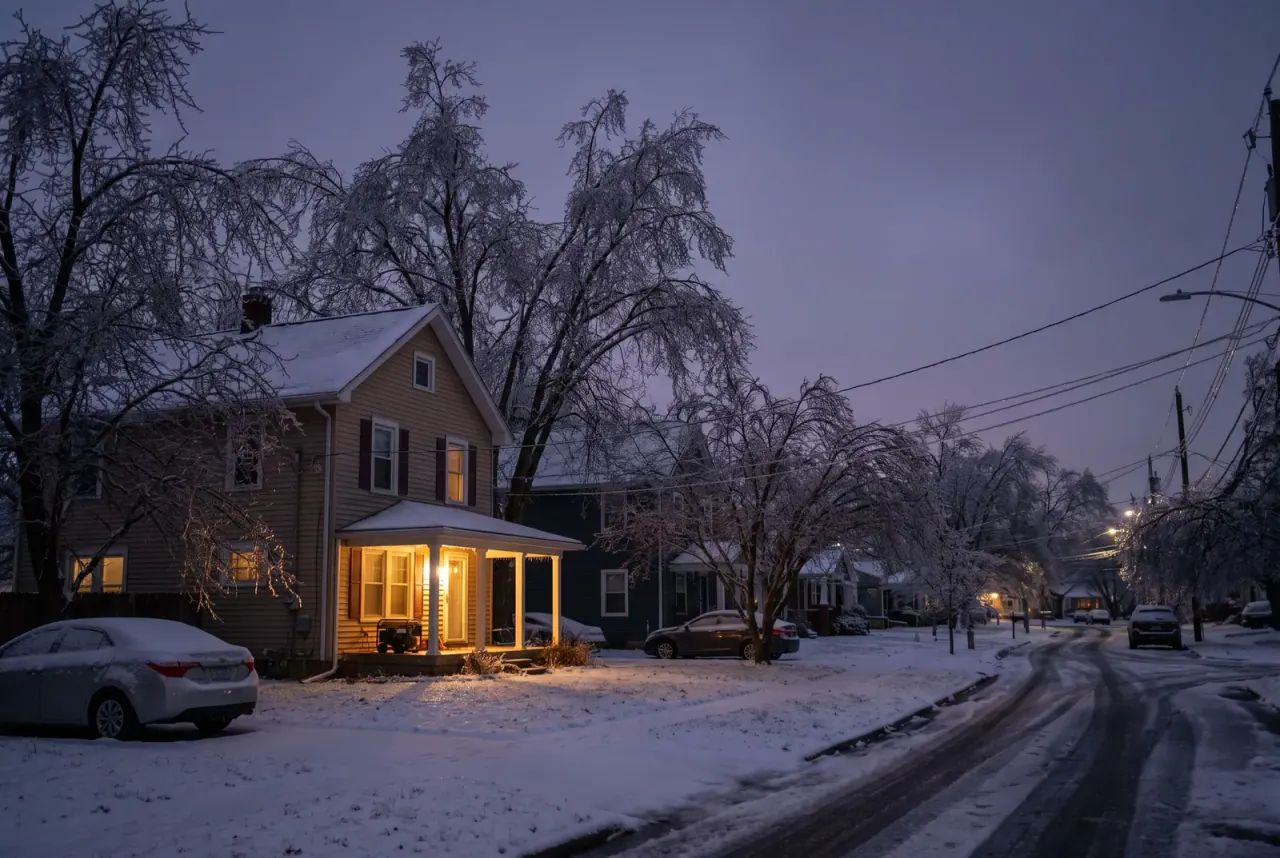
Discuss snow, ice, drainage and service access with the installer or maintenance professional before an outage. Follow the manual’s instructions for clearance and keeping the equipment accessible. Do not build an improvised cover, wrap the enclosure or screen it in a way that interferes with airflow.
A walkway that is usable in October may be difficult during an ice event. Decide who can reach the unit safely and what owner tasks the manual permits. If nobody in the household can safely do required checks, arrange an alternative before relying on extended operation.
Do not approach the generator through standing water or unstable ice. If the conditions prevent safe access, report that limitation when contacting help rather than attempting a check at any cost.
Plan fuel and maintenance for a longer outage
For propane, review the supplier’s replenishment plan and the consumption assumptions for winter loads. For natural gas, understand the limitations of the utility supply and the equipment’s demand. Neither arrangement removes routine maintenance needs during prolonged operation.
The fuel planning guide explains what belongs in a runtime estimate. Extended-use maintenance is model-dependent; use the relevant manual and service advice rather than promising that the system can run unattended indefinitely.
- Keep model instructions and service contacts accessible without household internet.
- Know the safe shutdown and restart guidance for the exact system.
- Record outage run hours when available.
- Arrange help for tasks the household cannot safely perform.
A practical pre-winter conversation
Ask the service provider to review the outstanding maintenance, winter accessory requirements and operating limitations together. Request written answers for anything that changes the original backup plan. If heating equipment has been replaced, say so explicitly.
Send the model, city and last service information with a maintenance inquiry. For a new installation, begin with the load worksheet and placement review while the site can still be evaluated safely.
Sources and scope
Prepared from the primary sources below. Equipment manuals and the responsible local authority control the requirements for your specific project; this page is a planning aid, not an installation procedure.